A Day in Ojców
A limestone valley of gates, caves, and follies half an hour north of the city — the green day out Kraków rarely gets credit for.
The short version
- Regional buses and minibuses run from Kraków to Ojców in about an hour, but they are few — check both directions before you commit the day, and treat the return time as fixed. Park info at ojcowskiparknarodowy.pl.
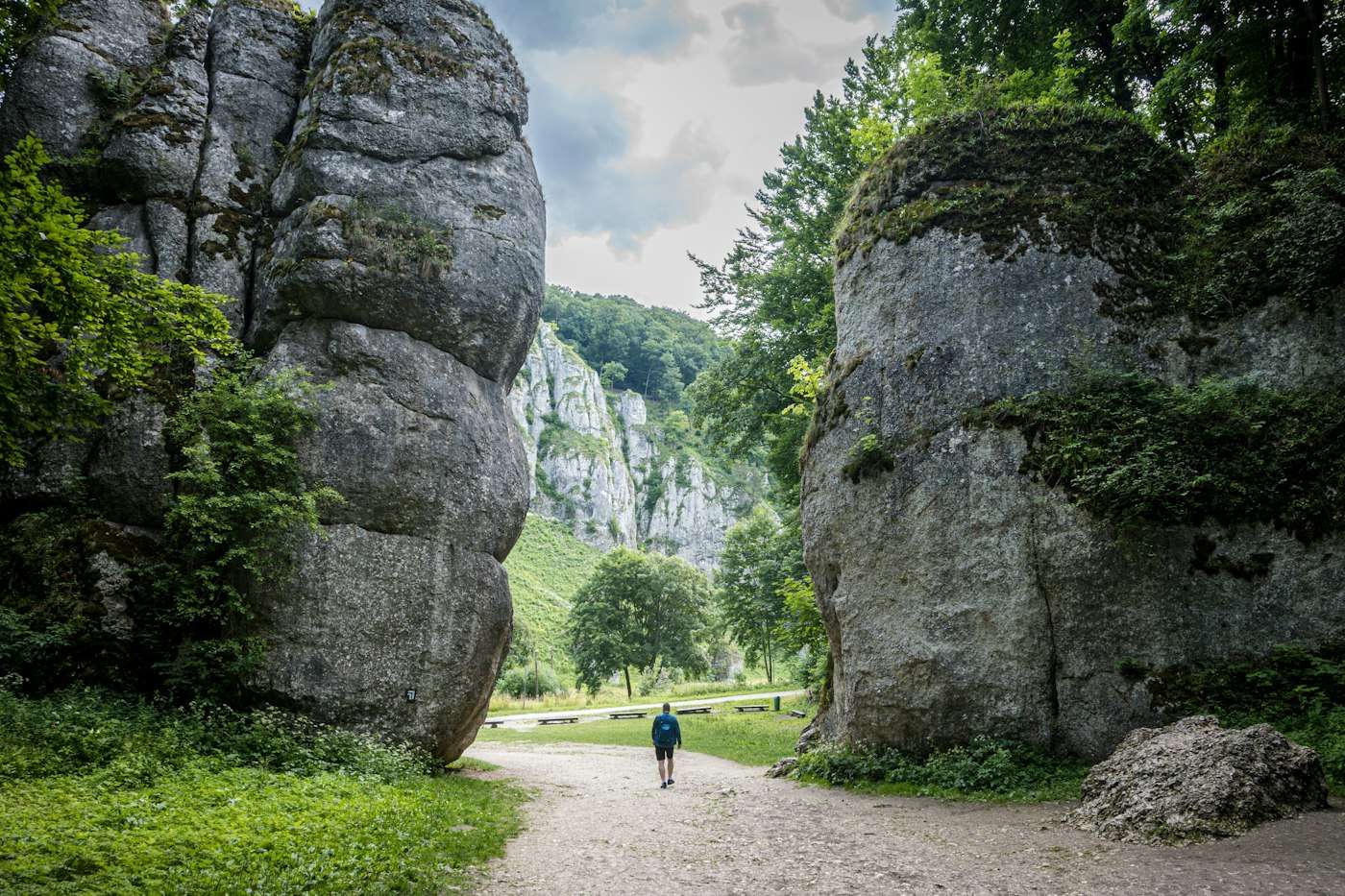
- The park itself is free: a limestone gorge of white cliffs, beech woods, and rock towers, of which the Kraków Gate — two pillars framing the path — is the emblem.
- Łokietek’s Cave, where legend hides King Władysław the Elbow-High from Bohemian pursuit, runs guided visits for around 20–25 PLN; a spider’s web over the entrance supposedly saved the king, and the story is told with a straight face.
- The Chapel on the Water stands on stilts over the stream — built that way, the tale goes, to dodge a tsarist ban on building “on the land” of the valley.
- Pieskowa Skała, the Renaissance castle on its cliff at the valley’s north end, anchors the classic walk; below it stands the Hercules’ Club, a 25-meter limestone pillar that looks exactly like its name.

Getting there
Regional buses and private minibuses leave Kraków for Ojców and Skała several times a day and take about an hour; services also pass Pieskowa Skała, which lets you ride to the castle and walk back down the valley. Frequencies are thin — check the day’s timetable both ways before leaving Kraków, or simply take a taxi one direction (about 40 minutes) and the bus the other. Drivers park at Ojców or the castle; the valley floor itself is walking country.
The day
Start at Ojców village, under the ruined watchtower of Kazimierz the Great’s castle, and walk the valley floor north: the Prądnik stream, white cliffs through beech leaves, and the Kraków Gate’s twin pillars inside the first half hour. Łokietek’s Cave sits up a side path — cool, dark, and attached to the legend of the king saved by a spider’s web across the entrance. Back on the main trail, the Chapel on the Water straddles the stream on stilts, photogenic beyond its size. The walk to Pieskowa Skała runs about five kilometers of easy valley; the castle rises straight from its cliff, Renaissance arcades over limestone, with the Hercules’ Club standing guard below — the two of them make the region’s most theatrical pairing. The castle’s courtyard and terrace café close the loop; time the return bus from the castle stop, or walk back down the valley if the timetable insists.
When to go
April through October — the valley is a walking day, and the beech woods pay in green or gold depending on the end of the season you pick. October is the connoisseur’s month. Summer weekends bring Kraków families in numbers; a weekday morning start beats both the crowds and the thin evening buses. Winter is starkly beautiful but icy underfoot, with the cave closed and buses thinner still.
Frequently Asked Questions
How do you get from Kraków to Ojców without a car?
Regional buses and minibuses run several times a day toward Ojców and Skała, about an hour. They are infrequent — check the day’s departures both ways first, or take a taxi out (about 40 minutes) and bus back.
Does Ojców National Park cost anything?
The park is free. The paid extras are Łokietek’s Cave (about 20–25 PLN, guided) and Pieskowa Skała castle’s interiors; the Kraków Gate, the chapel, and the valley trails cost nothing.
How much walking is the classic day?
Roughly 8–10 km end to end at valley-floor grades: Ojców village, the Kraków Gate, the chapel, then five easy kilometers to Pieskowa Skała. Comfortable shoes cover it; nothing is mountainous.
What is the Hercules’ Club?
A freestanding limestone pillar about 25 meters tall below Pieskowa Skała castle — the valley’s signature rock, carved by water and named by common sense. The castle terrace gives the best angle on it.
Why is the chapel built on the water?
The story: a tsarist decree banned building on the valley’s land, so in 1901 locals built their chapel on stilts over the stream instead. However embellished, the chapel is real, tiny, and worth the pause.