Auschwitz-Birkenau from Krakow
The Memorial and Museum on the site of the largest German Nazi concentration and extermination camp. Entry is free, reserved online, and worth planning weeks ahead. The visit takes a full day and should be given one.
The short version
- All entry passes are reserved at visit.auschwitz.org — free, issued to a named person, matched to ID at entry. Since March 1, 2026 there are no on-site sales of any kind.
- Educator-led visits, lasting about 3.5 hours across both Auschwitz I and Auschwitz II-Birkenau, are the standard and the strong recommendation; individual (unguided) passes concentrate in the early and late hours of the day.
- Buses from Krakow’s main MDA station reach the Memorial in about 90 minutes and stop nearest the entrance; trains to Oświęcim run similarly with a longer walk or local bus at the far end.
- Bags larger than roughly A4 size (about 30×20×10 cm) are not admitted; travel light or use the paid luggage storage.
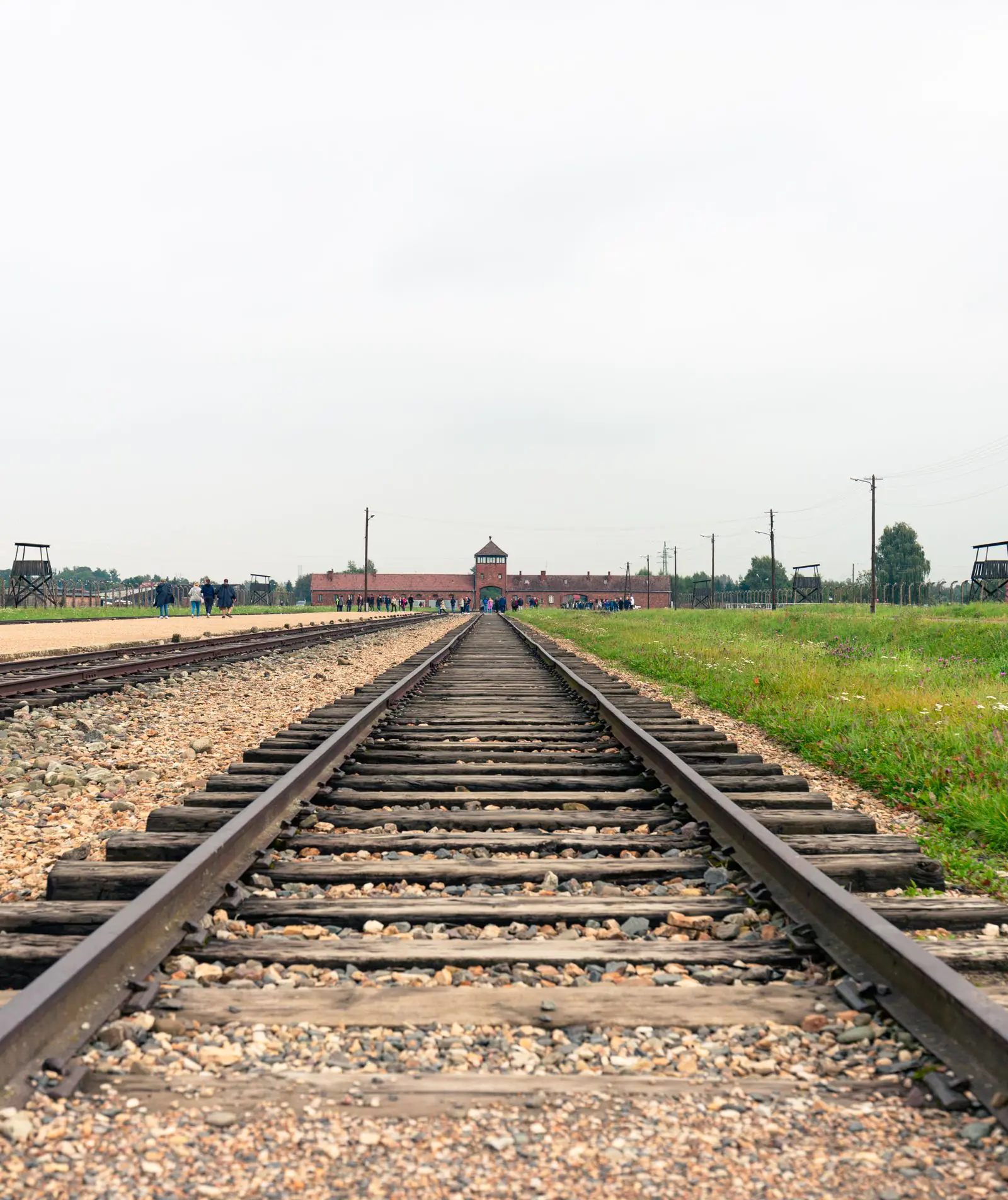
- A free shuttle links Auschwitz I and Birkenau, three kilometers apart; the visit covers both, and Birkenau’s scale is a large part of what the site conveys.
- The Memorial is open daily except January 1, December 25, and Easter Sunday, with seasonal closing hours; the site advises that the visit is not recommended for children under fourteen.
Getting there
Direct buses from Krakow’s MDA bus station (beside the main rail station) run frequently through the morning and take about ninety minutes, stopping close to the Memorial’s entrance — the most practical route. Trains to Oświęcim station take a similar time and leave a two-kilometer walk or local bus. Whichever you take, hold your entry-pass time with a margin: arrivals queue for security, and a missed slot cannot be resold to you at a desk that no longer exists. Licensed operators run transport-plus-reservation packages from Krakow; the independent version above costs little and works.
The visit
An educator-led visit moves through Auschwitz I — the brick blocks holding the documentary exhibitions, the evidence rooms, the standing gate — and continues by shuttle to Birkenau, where the ramp, the barracks, and the ruins of the crematoria stand in a space whose size no photograph prepares you for. The educators, trained by the Memorial, carry the material with precision and without theater; questions are welcome and answered plainly. Headsets keep the groups quiet. Individual visitors with early or late passes walk the same ground with the guidebook or the Memorial’s app. However entered, Birkenau asks for unhurried time — the site’s meaning accumulates by walking it.
Practical notes and conduct
Dress for open ground in all weathers; both sites are largely outdoors and Birkenau is unsheltered. Photography for private purposes is permitted in most outdoor areas and restricted where marked — the Memorial’s signage is explicit, and following it is part of being there. Eat beforehand or from the visitor-center facilities; there is nothing else nearby, appropriately. Phones silent, voices low, and the day planned so that this is its only commitment. Returning to Krakow in the evening, most visitors want quiet rather than plans; leave the evening empty.
Frequently Asked Questions
Do I have to take the guided visit?
During the core hours of the day, educator-led entry is the operating standard, and it is the right choice regardless — the visit is dense with material that unguided walking misses. Individual passes exist in the early morning and late afternoon for those who need them.
How far ahead should I reserve?
Weeks ahead for spring through autumn, and earlier for July and August — the free passes are capped and allocated fast. Winter weekdays offer the most availability.
Is the visit appropriate for children?
The Memorial itself advises against visits by children under fourteen, and the exhibitions do not soften anything. Families should take that guidance seriously.
Can I visit Auschwitz and Birkenau in one day from Krakow?
Yes — that is the standard visit, and the free shuttle links the two sites. The full undertaking, with travel, fills the day from morning to early evening. It should not share the day with anything else.
Why visit?
The Memorial exists so that the site itself — the evidence, the scale, the names — remains part of the record. Over a million people were murdered here, most of them Jews. Visiting, prepared and unhurried, is how that record is kept by the living.